Digital Inclusion Components Graphics
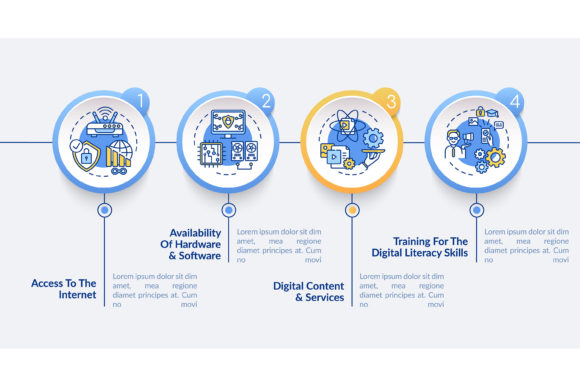
As a digital product creator with years of experience in online selling, I always look for assets that offer flexibility, clarity, and visual appeal. Digital Inclusion Components is a graphic design asset that stands out for its clean, structured layout and professional aesthetic. It’s designed as a vector infographic template, making it ideal for data visualization, process timelines, and workflow layouts.
First Impressions: Visual Personality and Niche Appeal
The first thing I noticed about Digital Inclusion Components is its modern, minimal feel. The use of linear icons and a clear four-step structure gives it a professional edge, making it suitable for business, educational, or corporate settings. The design doesn’t scream playfulness or whimsy, but it does exude a sense of order and precision that can be useful across multiple industries.
This asset would likely attract buyers looking for something that feels polished and functional. It’s not the best fit for a handmade or rustic-themed shop, but it could work well in a digital download store targeting small businesses, educators, or content creators who need to present information clearly.
Real-World Applications for Digital Product Sellers
Digital Inclusion Components can be used in a variety of ways. As an SVG design, it’s perfect for Cricut projects, where clean lines and precise cuts are essential. As a PNG design, it works great for t-shirt graphics, mug designs, or printable wall art. The vector format also makes it easy to scale without losing quality, which is a big plus for print-on-demand sellers.
It could also serve as a base for Canva templates, allowing users to add their own text or branding. For social media graphics, the design provides a strong visual hierarchy, making it easy to create engaging posts or promotional visuals. With some tweaks, it could even be turned into a planner sticker or greeting card design.
Enhancing Product Presentation and Branding
When it comes to product presentation, Digital Inclusion Components has a lot to offer. Its clean layout makes it ideal for mockup previews, where clarity and visual impact are key. It can also help build brand consistency when used across multiple products in a bundle.
For Etsy products or digital downloads, the design can be used as a thumbnail image, helping to catch a buyer’s eye. It also supports visual storytelling, which is crucial for creating compelling listings that convert. Whether you're selling clipart, illustrations, or sublimation designs, this asset can elevate the overall look of your product collection.
Where It Works Best
Digital Inclusion Components shines in large product previews, themed bundles, and decorative layouts. It’s especially effective when paired with other design elements to create a cohesive theme. For printable products like nursery prints or seasonal bundles, the clean, structured style adds a level of sophistication that can increase perceived value.
It also works well for social media promos, product mockups, and creative marketplace listings. Its versatility allows it to be adapted for different platforms and audiences, making it a valuable addition to any digital product library.
Where to Use It Carefully
While Digital Inclusion Components is a strong design, there are some situations where it may not be the best choice. Tiny sticker details might get lost in the complexity of the layout, and overly intricate designs could overwhelm the simplicity of the original concept.
Low-resolution print products may not do justice to the detail in the vector file, and crowded thumbnails could make it hard for buyers to see the design clearly. Dark backgrounds or weak contrast may reduce the visibility of the linear icons, so testing on different color schemes is important.
If you’re planning to use it for Cricut or Silhouette projects, make sure the cut lines are clean and well-defined. Text-heavy templates may not be ideal unless you plan to customize them significantly.
Practical Seller Notes
Before publishing any product using Digital Inclusion Components, I recommend testing it on real mockups. Preview it as a marketplace thumbnail to ensure it looks good at smaller sizes. Check how it appears on both white and dark backgrounds, and test print colors to make sure they match your expectations.
Verify PNG transparency if you’re using it for layered designs, and inspect SVG cut quality if you’re planning to sell it for crafting purposes. Confirm the file resolution and organize the files clearly for your customers. Pair it with different font styles—serif, sans serif, script, handwritten, or display—to show its versatility.
Finally, always confirm the commercial license before selling any finished products. This ensures that you’re compliant and avoids any legal issues down the line.
Conclusion: A Versatile Asset for Digital Sellers
Digital Inclusion Components is a solid graphic design asset that offers a range of possibilities for digital product creators. Whether you’re selling SVG designs, PNG graphics, or Canva templates, this asset can help you create more professional-looking products that stand out in the market.
By understanding its strengths and limitations, you can effectively integrate it into your product lineup and enhance your online shop’s visual appeal. It’s a great tool for small business branding, handmade businesses, or any creative entrepreneur looking to expand their digital product offerings.